
Status Against Independence
Queen of HeartsThis flow traces how the novel tests inherited rank and wealth against personal choice, service, work, and the economic pressures of the Depression.
increasing Bearing strength in each event
 decreasing
Bearing strength in each eventdecreasingAn Aristocrat Without Income

An Aristocrat Without Income
Rank without employment
Georgiana has noble connections but little money and few socially acceptable ways to earn. Her education has prepared her for ceremony more than financial independence.
Boredom as a class problem
The country-house setting appears comfortable, yet Georgiana’s idleness is enforced by expectations about what a young aristocratic woman should do.
The novel separates inherited status from actual security.
The Depression in the Streets

The Depression in the Streets
Wealth and deprivation together
Georgiana sees shabby men and people facing hardship before entering the Plaza Hotel’s polished world. The contrast makes the Depression more immediate than abstract reports.
A new social awareness
She imagines using wealth and position to help others if she ever possesses them. Her aristocratic identity begins to carry a responsibility beyond manners.
The experience complicates her earlier longing for luxury.
Service and Equality

Service and Equality
Queenie questions custom
Queenie argues that American equality should allow her to swim during her free time and reject the rigid deference expected in England. Georgiana struggles to answer without relying on rank alone.
Freedom has limits
Queenie’s later employer offers wages but demands degrading work. The novel suggests that equality is not guaranteed by national slogans when economic power remains unequal.
The episode asks what fair treatment means in everyday labor.
Marriage as Economic Strategy
Marriage as Economic Strategy
Claire’s calculations
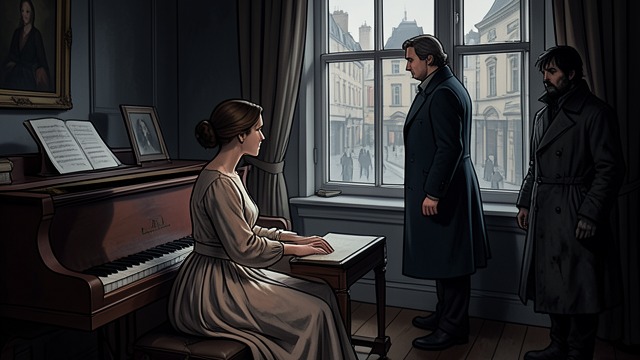
Claire sees a wealthy husband as protection and advises Georgiana to secure a rich match. Georgiana resists, valuing love with Darcy over material comfort.
Belinda’s desperation
Belinda openly hopes that a wealthy lover might give her security. Her candor reveals how economic vulnerability can make romance feel like a practical transaction.
The novel does not dismiss money; it asks what people must trade to obtain it.
Work as a Possible Future
Work as a Possible Future
Different paths emerge
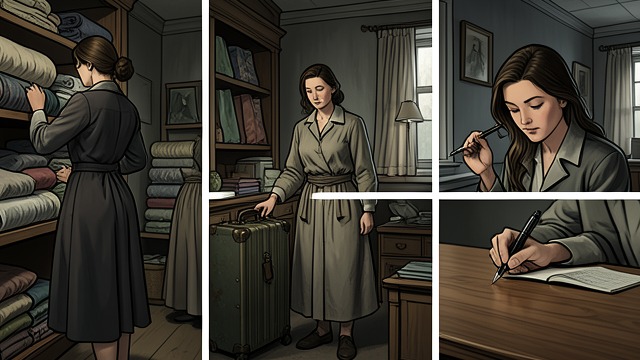
Belinda seeks costume work, while Georgiana remains unsure where she will live and how she will support herself. Claire is content to leave the film industry behind.
Independence remains unfinished
The women’s choices are constrained by money, class, and gender, but not identical. The ending offers no simple transformation into financial security.
Their varied decisions suggest that agency begins with choice, even when resources remain scarce.
July 9, 1934, at Kingsdowne Place
July 16, 1934, in New York City
July 30, 1934, at Beverly Hills Hotel
July–August 1934, in the conversations about Reno
August 4–7, 1934, after the fire
